See How It WorksForm 8621 FilingEasily generate IRS Form 8621 for PFIC reporting. No spreadsheets. No stress.1Stress-Free PFIC Filing Starts Here12323 Send Us Your PFIC InfoWe Prepare Form 8621Receive Your Filing PackageUpload your account statements or transaction history.Our experts complete the form, apply the right elections, and ensure accuracy.You get a ready-to-file Form 8621 plus a guide showing where everything goes on your tax return.Prepare My Form 8621
Form 8621 is a U.S. tax form used to report income, gains, and other information from a Passive Foreign Investment Company (PFIC). U.S. taxpayers with direct or indirect ownership in a PFIC must file it to avoid punitive tax treatment and interest charges.
Why Use Our Tool?
Handles All PFIC Scenarios
Whether it's a straightforward purchase and sale or a more complex case involving multiple distributions, reinvestments, and other transactions, our solution handles every detail with ease.
Automatic Calculations
No spreadsheets or manual formulas needed — we handle excess distributions, Mark-to-Market (MTM), QEF elections, expatriation reporting, and transitional rules seamlessly.
Clean, IRS-Ready PDF Output
Submit with confidence using a polished, fully completed PDF that’s formatted to IRS standards. Every calculation, election, and disclosure is clearly presented, so you can file your Form 8621 with ease—whether you're attaching it to a tax return or submitting it independently.
Built for Expats & Professionals
Designed by experienced expat tax professionals deeply versed in PFIC regulations, our tool is trusted by U.S. taxpayers and cross-border tax specialists around the world. It simplifies complex filings and ensures compliance, making it an invaluable resource for those navigating international tax challenges.
Manual Excel Filing vs. Form 8621 Calculator™:
Which Is Right for You?
Feature
Doing It Yourself (Excel)
Form 8621 Calculator™
Excel (DIY)
PFIC Pro
Excess Distribution Math
Excess
Distribution
Math
Complex, error-prone calculations
Automated and accurate calculations
Complex
and
error-prone
Automated
and
Accurate
Foreign Currency Handling
Foreign
Currency
Handling
Manual currency conversions
Built-in handling of currency fluctuations
Manual
Lookup
Built-in
conversions
Multiple PFICs
Multiple
PFICs
Tedious to track and consolidate
Easily manages large portfolios
Tedious
Easy
IRS-Formatted PDF
IRS-Format
PDF
Requires manual formatting
Generates professional, IRS-ready PDFs
Manual
completion
Automatic
QEF and MTM Elections
QEF and
MTM
Elections
Difficult to apply correctly
As easy as ticking a checkbox
Difficult
One
click
elections
Transitional Rules Handling
Transitional
Rules
Handling
Manual tracking and application
Automatically applies transitional rules
Manual
tracking
Automatic
Section 1291
Section 1291 is the default—and harshest—method of PFIC taxation, treating gains and excess distributions as if they were received evenly over the holding period and taxing them at the highest rate for each prior year. Calculating the resulting tax and interest is notoriously complex, but our software can handle it in minutes, saving you time and frustration.
All PFICs that do not currently have Mark to Market or Qualifying Electing Fund elections are taxed under § 1291 of the Internal Revenue Code. § 1291 taxation is very complex and convoluted but the basic premise is that the taxpayer will be treated as if any gain in the investment were received evenly over the period of ownership and that the taxpayer was in the highest tax bracket during each year other than the current. Ultimately gain is taxed at either the taxpayer’s marginal rate for the current tax year or at the top tax rate for all earlier years which has been 35% for many years prior to 2013 when the rate rose to 39.6%, in addition interest will be added to the tax attributed to years before the current.
§ 1291 taxation will always be imposed on distributions/income received during the year and can be elected to “purge” or clear the investment of the current unrealized gain to make way for a M2M or QEF election which would not include backward looking taxation at top rates.
To arrive at the amount of income that will be taxed as § 1291 income you must determine the amount of excess distributions each year. No gain allocated to 1986 and earlier will be PFIC income subject to taxation as an excess distribution since the regulations did not take effect until 1987. All income from the sale or disposition of a PFIC is an excess distribution. The amount by which annual income/distributions exceed 125% of the average non-excess distributions received in the prior 3 years- meaning the amount that was previously included as ordinary income not subject to the high rate of taxation. Excess distributions are calculated per share so things can become confusing when there are multiple purchases.
Once the total amount of the excess distribution has been determined, you must ratably allocate the amount to each share based on the length of ownership and further to 3 distinct periods- each with its own set of rules:
Pre-PFIC
Prior year PFIC
Current year
Here are some basics:
§ 1291 is the default method of taxation for PFICs
The taxpayer may choose to impose § 1291 tax on phantom income or income that has not been received yet.
Any income or gain allocated to years before 1987 is not PFIC income
§ 1291 income may be taxed as ordinary income or at the highest tax rate of a prior tax year plus interest.
§ 1291 never receives reduced taxation as a capital gain
Unrealized losses cannot offset unrealized gains
Losses cannot be recognized until they are realized
Gain/loss must be calculated for each share (or block of shares purchased at the same time)
Excess distributions must be calculated for each share (or block of shares purchased at the same time)
Cost basis must be maintained for each share (or block of shares purchased at the same time)
There is really no way around the punitive § 1291 taxation since any direct or indirect disposition of PFIC shares including gifting, death, renouncing US citizenship and becoming a non-resident alien by moving out of the country all trigger the deemed disposition rules in § 1291. That being said- there is room for argument on these “deemed” dispositions for those who are savvy enough and have the fortitude to challenge the interpretation of the Regs.
Disclaimer
Information provided by Expat Tax Tools, Inc. on this site is not to be construed as legal, tax, or accounting advice. Every effort is made to provide current and accurate information but tax laws and regulations can change and errors can occur. This information is provided “as is” with no guarantees of completeness or accuracy and without warranties of any kind- express or implicit.
Mark to Market
The Mark-to-Market election under §1296 is a more favorable PFIC tax method than §1291, though not as beneficial as a QEF. It requires tracking annual gains, losses, and basis adjustments per share—a complex process made simple by our software, which handles the regulations, calculations, and tracking with the ease of checking a box.
The Mark to Market election under §1296 is an optional method of PFIC taxation that is better than §1291 but not as tax friendly as QEF. In a nutshell- any unrealized gain in the PFIC during the tax year is included in the shareholder’s income as ordinary income. If the investment has lost value over the year losses are allowed but only to the extent of “unreversed inclusions” or previously included gain. When the PFIC is sold gains are ordinary income and losses are either ordinary or capital depending on the situation.
When a Mark to Market election is made the taxpayer is required to “purge” any prior gain in the PFIC by doing a deemed disposition under §1291 rules and paying any §1291 tax and interest prior to the election taking effect. This means that the entire investment is treated as if it were sold for fair market value (FMV) on Dec 31 (last day of the taxpayer’s tax year). All shares that have a gain will be taxed as excess distributions meaning that gain allocated to the current tax year will be included on the tax return as ordinary income and any gain allocated to years before the current one will be taxed at the highest tax rate for that year and an additional interest charge will be added. Any shares that have dropped in value due to either the performance of the investment or fluctuation in the currency exchange rates will be disregarded- no losses are allowed in a §1291 “purge”. Losses can only be recognized when they are realized.
Although the form line instructions look easy- they are not. You are required to prepare a separate Part IV (2015 Form 8621) for each share or block of shares purchased at the same time. All basis, gain, loss, and unreversed inclusions must be tracked per share. This becomes tedious and overwhelming when the fund reinvests dividends monthly to purchase more shares, or the shareholder sells shares each month as part of a retirement income plan- or Heaven forbid- a mutual fund pays monthly dividends and reinvests them and also sells shares and distributes the cash every month. Remember – the rule is FIFO-first in first out- so you cannot offset the purchases and distributions in a year and just deal with whatever is left over.
Only PFICs that are marketable securities are eligible to make a Mark to Market election. Mark to Market elections can only be made on a timely filed tax return. Once made it remains in effect for all subsequent years and Form 8621 is required annually.
Disclaimer
Information provided by Expat Tax Tools, Inc. on this site is not to be construed as legal, tax, or accounting advice. Every effort is made to provide current and accurate information but tax laws and regulations can change and errors can occur. This information is provided “as is” with no guarantees of completeness or accuracy and without warranties of any kind- express or implicit.
QEF
The QEF election under §1295 offers the most favorable PFIC tax treatment, resembling U.S. mutual fund taxation and allowing capital gains treatment—if prior §1291 gains are addressed. Though it involves phantom income and detailed per-share tracking, our Form 8621 calculator simplifies both Pedigreed and Unpedigreed QEF calculations, even when tax years don’t align.
The QEF or Qualified Electing Fund election under §1295 is optional method of taxation available for certain PFICs. This election most closely mirrors the US taxation of US mutual funds and allows for capital gains treatment of some of the income as long as any prior §1291 gain has been dealt with. Choosing not to purge the §1291 gain when making the QEF election is possible, but doesn’t necessarily accomplish much since you are required to treat any disposition as if it were sold under the punitive default taxation method. Once the election has been made Form 8621 is required to be filed each year and the election will remain in place for all subsequent years.
Not all PFICs are eligible for Qualified Electing Fund status. In order for a mutual fund or other PFIC investment to allow for Qualified Electing Fund treatment by the shareholders it must jump through some hoops for the IRS. The PFIC must maintain books under IRS acceptable accounting procedures and compute gain, loss and income each year using those same principles. The PFIC is also required to provide a “PFIC Annual Information Statement” to its investor’s each year providing not only the amount of income to include on Form 8621 but other specific required attestations. If no annual statement is provided to the taxpayer- no QEF election can be made.
Essentially a Qualified Electing Fund looks like a partnership where the income retains its character and is reported by the shareholder each year whether they receive it or not and gains and losses on sales are treated as capital gains and losses- with some distinct differences. Losses will not flow through to the investor during the period of ownership, they are simply disregarded or put on hold. Cost basis is tracked per share and which must be adjusted up and down each year in accordance with income allocated to the taxpayer on the annual statement and actual distributions received.
There are two types of Qualified Electing Fund PFICs- pedigreed and unpedigreed. The distinction between them being whether there are any years before the election was made that is still subject to §1291 taxation. Until a QEF or mark to market election is made, all PFICs will default to taxation under §1291. When a QEF election is made the taxpayer has the option to “purge” any prior gain in the PFIC by doing a deemed disposition under §1291 rules and paying any §1291 tax and interest; or just making the QEF election and dealing with the §1291 rules when the investment is actually sold. The latter is not generally a tax efficient solution- but there are situations where it could work well.
The QEF election involves including the ordinary income and capital gains in the shareholder’s income each year –even if the money was not actually received. Making the election will allow gains on disposition of pedigreed QEFs to be taxed as capital gains when they are sold. There is a glitch in the current regulations that would require a current 8621 and an amended 8621 to be filed for any year in which a PFIC reports its annual statement using a fiscal year and a calendar year shareholder sells shares between the end of the PFIC fiscal year and December 31.
Check out our article on the mismatch of gain recognition and basis adjustment by clicking on the link below. The trouble with QEF reporting
Disclaimer
Information provided by Expat Tax Tools, Inc. on this site is not to be construed as legal, tax, or accounting advice. Every effort is made to provide current and accurate information but tax laws and regulations can change and errors can occur. This information is provided “as is” with no guarantees of completeness or accuracy and without warranties of any kind- express or implicit.
Deemed Sale
A deemed sale allows taxpayers making a QEF election to “purge” prior PFIC gains by recognizing them under §1291 and paying the associated tax and interest. If skipped, §1291 rules apply upon actual sale—but with our software, making the election is as easy as checking a box, automatically switching to pedigreed QEF calculations.
Did your client just become subject to U.S. taxation? By applying the transitional rule and making a Mark-to-Market election in that first year, you can avoid §1291 tax on built-in gains and step up the PFIC’s basis to fair market value. Our Form 8621 Calculator handles this automatically—just enter the value on the date of change.
So what happens when a foreign person moves to the US and becomes a US taxpayer? Is a lifetime of good investing all of a sudden going to be wiped out by the PFIC rules? The good news is –absolutely not. The PFIC regulations include step-by-step transitional rules for people who are new US taxpayers.
First a quick review of a few key points:
Non-resident aliens can’t own PFICs. The passive foreign investment company rules do not apply to anyone who is not subject to US taxation as a resident. Any unrealized gain prior to the transition to US taxpayer does not necessarily have to be subjected to section 1291 (but without good planning it could be).
The basis of assets owned by non-resident aliens moving to the US do not automatically step-up to FMV on the day they become a US taxpayer. Don’t believe me?- give a read to Revenue Ruling 55-62 which talks about cows, but if you substitute PFIC every time the word cow is used you will see what I mean. But you can sometimes find a way- and this is one of those times!
Now that we have that out of the way- the transitional rule is pretty clear about how you need to do the math when a non-resident alien becomes a US person while owning a PFIC. There is a special rule to allow the basis to step up to the larger of adjusted basis or FMV on the date the person becomes a US resident taxpayer.
Be mindful when you have a client who has just become subject to the Internal Revenue Code as a resident taxpayer. Making a Mark to Market election in the first year will ensure that the investment will never be subjected to the nasty §1291 taxation. If the election is not made in the first year you risk making unrealized gain that otherwise would be subject to tax as ordinary income a victim of 1291 taxation at a rate of 39.6%.
The special inbound transition rule for a stepped-up basis found in §1296(l) can only be invoked if the person makes a mark to market election in the first year a person is subject to US taxation as a resident. Taxation on the prior appreciation is deferred until there is a disposition and will be taxed under §1001 at that time.
Consider the example of a Canadian taxpayer who becomes a US resident taxpayer on January 1, 2013. They enter the US with a Canadian mutual fund that they have owned since Dec 31, 2007 (5 years) and has an unrealized gain of $10,000 USD. If they make a mark to market election in 2013 (their first year in the US)they will have no income from the PFIC in 2013 (assuming there are no distributions or appreciation during 2013), and the basis for purposes of the MTM PFIC rules is the higher of the adjusted basis or FMV on January 1, 2013. When the taxpayer eventually sells the investment the $10,000 of pre-PFIC gain is taxed under IRC §1001 as long term capital gain.
If they decide to wait and not do anything and then 5 years later they sell the entire PFIC, and assuming the unrealized gain is still $10,000, the taxpayer now has to calculate the taxes under the 1291 rules and a portion of the prior appreciation is now subject to punitive taxation. Instead of -0- income and a $10,000 long term capital gain later- the taxpayer has $6000 in ordinary income ($5,000 of pre-PFIC gain taxed as ordinary income, $1,000 current year PFIC gain taxed as ordinary income and the remaining $4,000 of unrealized gain is allocated to the prior years it was a PFIC- generating $1537 in 1291 tax for the PFIC years onto which $136 interest will be added.
Expatriation
Did your client just become not subject to U.S. taxation? Under temporary regs, PFICs are treated as sold on the last day the taxpayer is a U.S. person—triggering a deemed disposition. Our Form 8621 Calculator makes this easy, automatically handling the calculations so you can ensure compliance without the hassle.
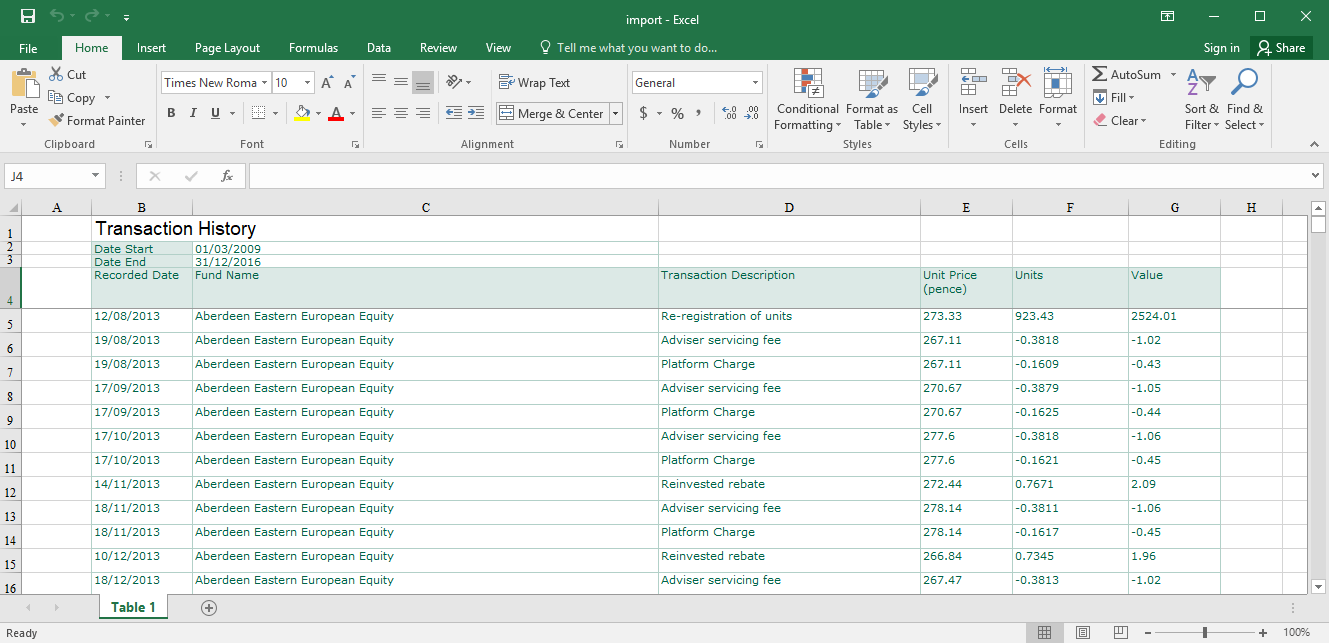
Importing an excel document directly into the calculator is not supported. In order to transfer the data first you must convert your file into a “csv” text base file.
Converting XLS, XLSX files to CSV
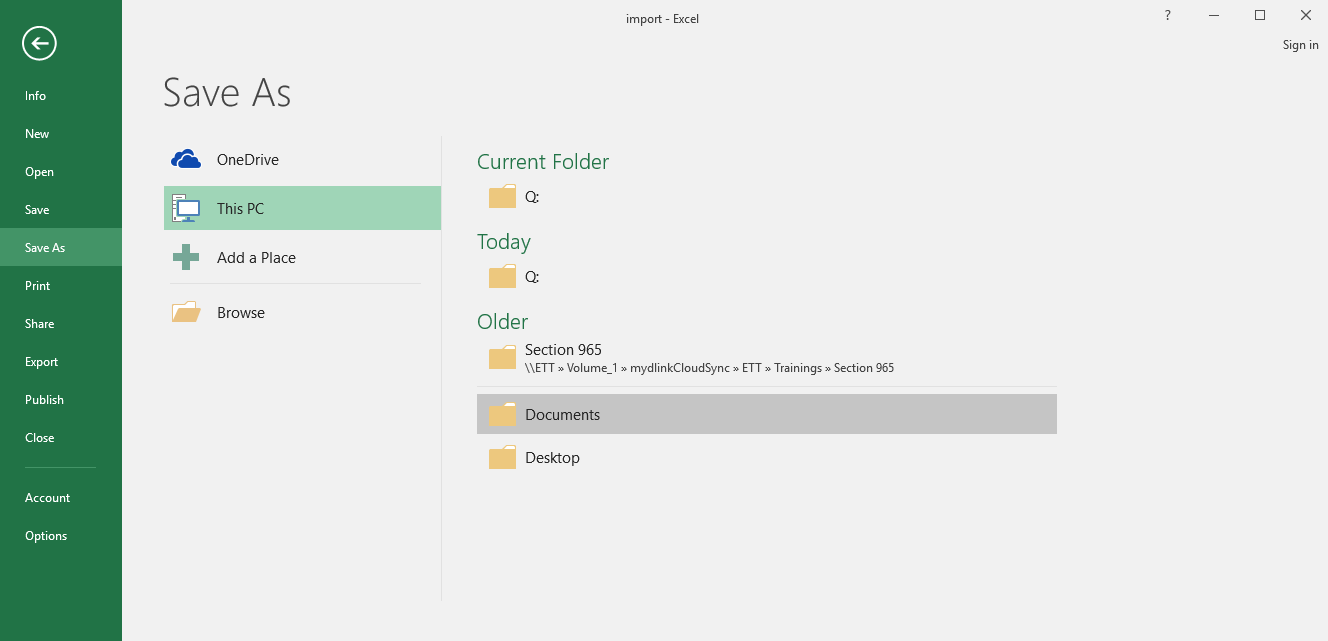
Open your excel document and select the worksheet you want to convert.
Go to the “File” menu and select the “Save As” option
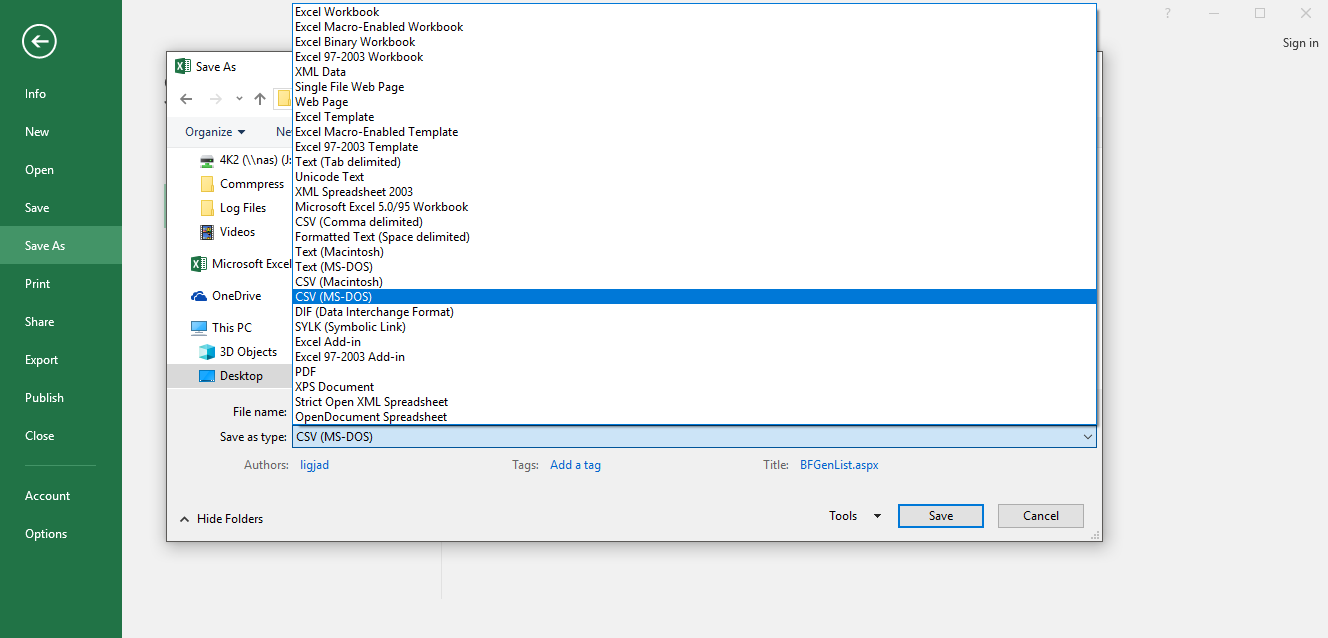
Select the folder where you would like to save the file and change the file type to CSV (MS-DOS).
(Note that if your file is in a MAC format you may need to make adjustments to your dates).
"Save"
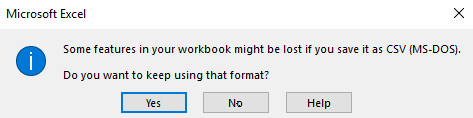
As excel workbooks can contain formulas, macros and other special features, you may get a warning that these will be lost when converting the file to a CSV format.
Select “Yes” to continue.
Importing The CSV File into the Calculator
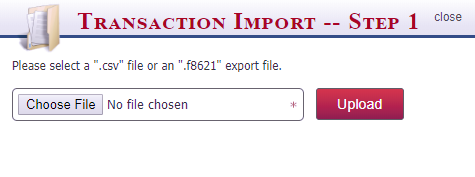
STEP 1
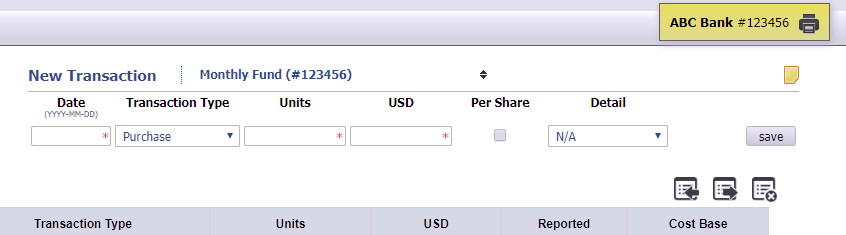
Go to the transaction history of the fund
Click on the import icon
Choose your file and click on the “Upload” button.
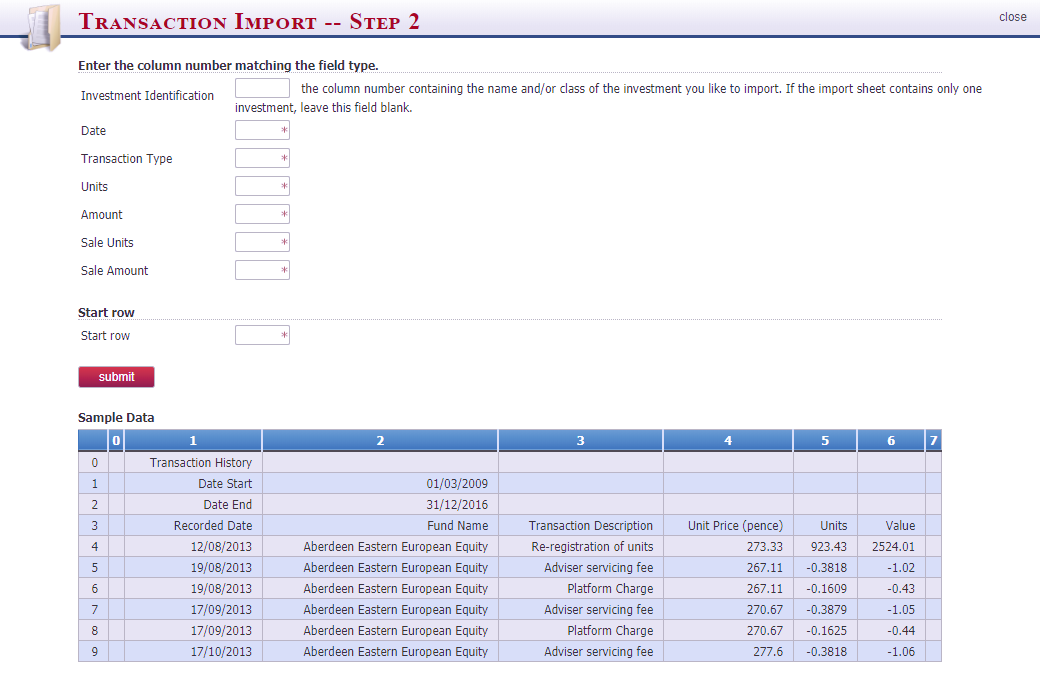
STEP 2
In order to import, you first must map the columns in your document to specify which columns contain the Date, Transaction Type, Units, Amounts and the start row.
It is not necessary to filter your spreadsheets to filter out each investment at the export. You can simply enter the column number that has the name of the investment listed in. If your sheet contains
only one investment you can leave this field blank.
Specify on which row the data actually starts on.
Preview of your document showing the first 10 rows
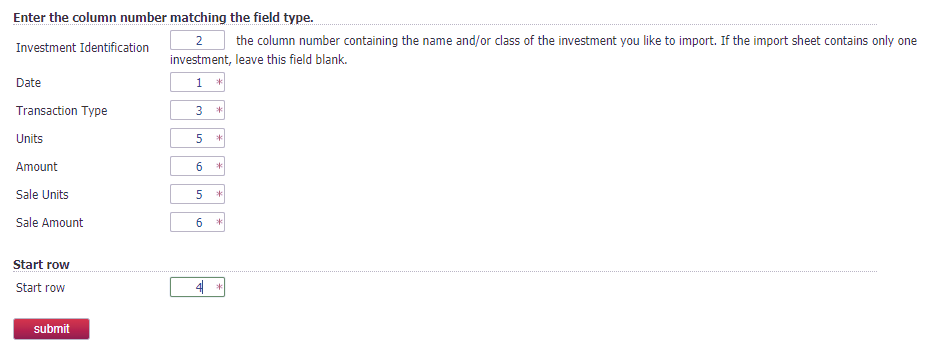
In our case we make the following entries:
Select the “Submit” button to continue.
STEP 3
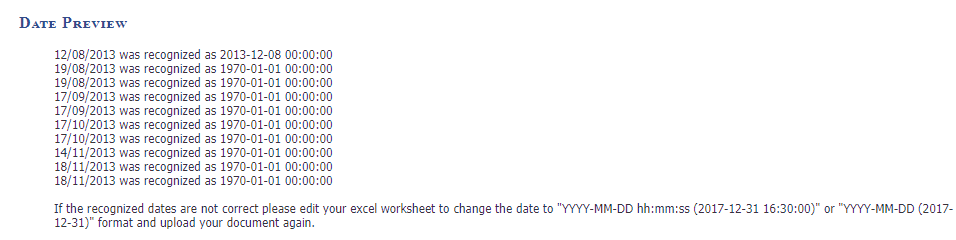
Date Preview
Please ensure that the dates were properly recognized. If not, you must go back to your excel file and
adjust the date format to “YYYY-MM-DD”
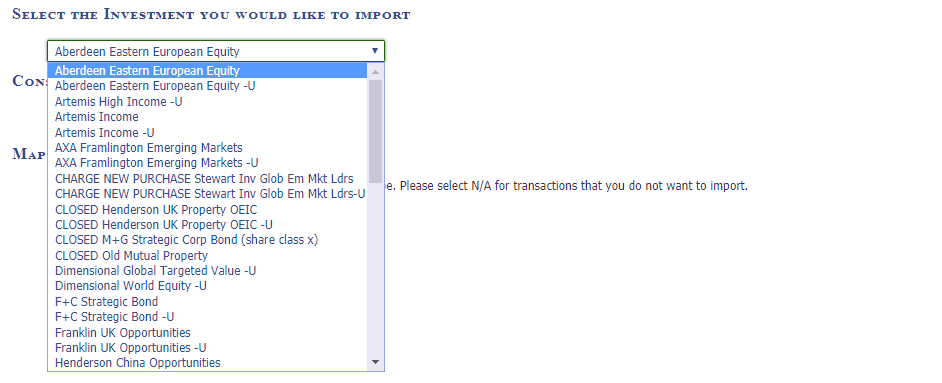
Select the investment you would like to import
Consolidated Import Option
If you would like to consolidate similar transactions on the same date into one block, select this option.
For example: Purchase of 1,000 shares on Jan 5, 2010 and another purchase of 500 shares on Jan 5,
2010 will be imported as Purchase of 1,500 shares on Jan 5, 2010.
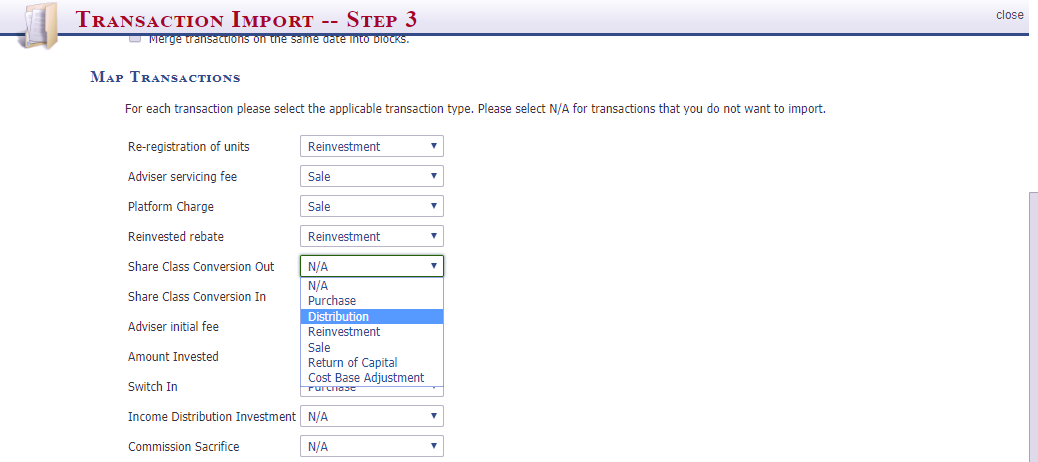
Set the transaction types
The calculator supports the following transaction types: Purchase, Distribution, Reinvestment, Sale,
Return of Capital, Cost Base Adjustment.
Select N/A if any of the transaction types does not apply to this fund and it will be skipped at import.
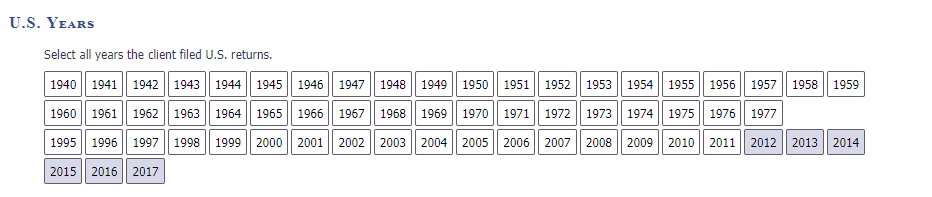
U.S. Years
Select all years the client has filed a US return.
Click the “Submit” button to complete the import process.
A complete, practitioner-focused walkthrough of how Passive Foreign Investment Companies are taxed — covering the §1291 excess distribution rules, the QEF election, and the mark-to-market election, with hands-on Form 8621 preparation under each regime.
4 IRS CE / 4 NASBA CPEIntermediate LevelSelf-Paced / On-DemandField of Study: Taxes
Few areas of U.S. international tax cause as much confusion — or as many costly filing errors — as the rules governing Passive Foreign Investment Companies. Foreign mutual funds, certain pooled investments, and many non-U.S. holding structures routinely meet the PFIC definition, often without the taxpayer realizing it, triggering a Form 8621 filing requirement and a punitive default tax regime.
This session builds your understanding from the ground up. You’ll learn precisely what makes an entity a PFIC, how to spot one in a client’s portfolio, and when Form 8621 must be filed. From there, the course works methodically through all three taxation regimes, weighing the trade-offs of each and demonstrating the actual mechanics of completing and reporting Form 8621 under every approach.
The emphasis throughout is on practical, return-ready application — so you leave able to handle real PFIC engagements with confidence, not just recite the theory.
Course at a glance
Credit Hours
4 NASBA CPE / 4 IRS CE
Program Level
Intermediate
Prerequisite
None
Advanced Prep
None
Field of Study
Taxes
Delivery
QAS Self-Study / On-Demand
Access
1 year from purchase
What you’ll be able to do
Four practical skills, built up across the session. Select a tab to see what each covers.
Identify a PFIC — and the filing trigger
Before you can report a PFIC, you have to recognize one — and that is exactly where most returns go wrong. A foreign corporation is a PFIC if it meets either of two tests in any year:
Income test: 75% or more of its gross income is passive — dividends, interest, rents, royalties, and capital gains.
Asset test: 50% or more of its assets produce, or are held to produce, passive income.
You’ll learn where PFICs hide in a real portfolio — foreign mutual funds and ETFs, money-market funds, certain insurance and pension wrappers, and many non-U.S. holding companies — and exactly when a Form 8621 obligation is triggered: receiving a distribution, disposing of shares, making or maintaining an election, or meeting the annual reporting threshold.
Why it matters: a missing Form 8621 can hold the statute of limitations open on the entire return — not just the PFIC.
The §1291 excess-distribution regime
If no election is in place, §1291 applies by default — and it is deliberately punitive. The course works through the mechanics step by step:
Split distributions into non-excess (taxed normally in the current year) and excess — the portion exceeding 125% of the average distribution over the prior three years.
Allocate the excess distribution (and any gain on sale) ratably across the entire holding period.
Tax the amounts allocated to prior years at the highest ordinary rate for each year, then add an interest charge for the deferral.
You’ll compute the deferred tax amount and interest charge, complete Form 8621 under §1291, and carry the results cleanly onto the tax return.
The Qualified Electing Fund (QEF) election
A QEF election is usually the most favorable path — when the information is available. It treats the fund like a flow-through entity:
Each year you include your pro-rata share of the fund’s ordinary earnings and net capital gain — preserving capital-gain character.
It avoids the §1291 interest charge entirely, giving the cleanest ongoing treatment.
It requires a PFIC Annual Information Statement from the fund, and timing matters — a first-year election keeps the fund “pedigreed,” otherwise purging elections may be needed.
You’ll learn when a QEF makes sense, how to make and maintain the election, and how to report it on Form 8621 and the return.
The Mark-to-Market (MTM) election
For marketable PFIC stock, mark-to-market is often the practical choice — especially when a QEF statement isn’t available.
Under §1296, you recognize the change in fair market value each year: increases are ordinary income.
Decreases are deductible only to the extent of prior MTM inclusions — an important limit to track.
Available for marketable stock, it sidesteps the need for a PFIC Annual Information Statement.
You’ll weigh MTM against QEF and §1291, complete Form 8621 under the MTM regime, and carry the annual inclusion through to the return.
Who should attend
✓EAs, CPAs, and tax preparers with clients holding foreign mutual funds or pooled investments.
✓Practitioners building a cross-border or expat tax practice who need PFIC fluency.
✓Anyone who has run into Form 8621 and wants a reliable, repeatable method for completing it.
✓Preparers who want to recognize PFIC exposure before it becomes a costly compliance problem.
Mary Beth Lougen
Chief Operating Officer
EA, USTCP, NTPI Fellow
Your instructor
Mary Beth Lougen, EA, USTCP, NTPI Fellow
An Enrolled Agent, United States Tax Court Practitioner, and NTPI Fellow, Mary Beth brings decades of hands-on experience preparing and reviewing the very returns this course teaches you to handle. She is widely recognized for translating the most technical corners of PFIC and cross-border reporting into clear, return-ready guidance.
Field of Study: Taxes (NASBA); Federal Tax Topics / Federal Tax Related Matters (IRS)
Prerequisite: None
Advanced Preparation: None
Program Level: Intermediate
Course access: Expires one year after purchase
Gregory & Associates, Inc. (dba Compass Tax Educators) is recognized and approved by the Internal Revenue Service Return Preparer Office (RPO) as a qualified sponsor of continuing education programs.
Gregory & Associates, Inc. is registered with the National Association of State Boards of Accountancy (NASBA) as a sponsor of continuing professional education on the National Registry of CPE Sponsors. State boards of accountancy have final authority on the acceptance of individual courses for CPE credit. Complaints regarding registered sponsors may be submitted to the National Registry of CPE Sponsors through its website: NASBAregistry.org. For any questions about refunds, education policies or other concerns, please contact our offices at (714) 777-9359 or email Sherrill Trovato at sherrilltrovato@gmail.com.
Gregory & Associates, Inc. (dba Compass Tax Educators) is approved by the Texas State Board of Accountancy as a continuing education provider.
Frequently asked questions
Do I need prior international tax experience?
No formal prerequisite is required, though the material sits at an intermediate level. You’ll get the most from it if you’re already comfortable with individual returns and basic foreign-income concepts.
What CE/CPE credit does this earn?
4 IRS CE and 4 NASBA CPE in the Taxes field of study, delivered as QAS Self-Study (NASBA) and On-Demand (IRS). The IRS program number is NMVBP-T-00338-26-S.
How long do I have access?
Your enrollment includes on-demand access for one full year from the date of purchase.
Who teaches the course?
Mary Beth Lougen, EA, USTCP, NTPI Fellow — an Enrolled Agent, United States Tax Court Practitioner, and NTPI Fellow who specializes in PFIC and cross-border reporting.
New Part V lines on page 3 of Form 8621. In the entry space provided for the new line above line 15a, filers are required to enter a three-letter currency code.
New line 15e(2) requests filers to report the line 15e(1) amount in U.S. dollars. If the amount on line 15e(1) is in a foreign currency, filers must convert the amount to U.S. dollars.
Line 15 Instruction changes:
In the entry space provided above line 15a, enter the three-letter currency code of the currency used on lines 15a through 15e(1).
The excess distribution must be determined in a single currency. In general, the excess distribution must be calculated in U.S. dollars. Each distribution is translated into the U.S. dollar at the spot rate on the date on which such distribution is made. However, if all distributions that must be taken into account for purposes of calculating the excess distribution are made in a single foreign currency, the excess distribution must be calculated in the currency in which the distributions are made. Each ratable portion of a total excess distribution determined in such foreign currency is then translated into U.S dollars at the spot rate on the date of the distribution to which the ratable portion is allocated. See section 1291(b)(3)(E) and Proposed Regulations section 1.1291-2(d)(4).
Line 15e(1)
Nonexcess distribution. The nonexcess distribution is the lesser of line 15a or line 15d. This amount is taxed according to the rules of section 301. To the extent that section 301(c)(1) is applicable, include the amount as a dividend on your income tax return. For corporations, include this amount on Form 1120, Schedule C, line 14. For individuals, include this amount on Form 1040, line 3b (and, if applicable, on Schedule B (Form 1040), line 5).
Excess distributions. If you received more than one distribution during the tax year with respect to the applicable stock, the excess distribution is apportioned among all actual distributions. Each apportioned amount is treated as a separate excess distribution.
For the latest information about developments relating to Form 8621, and its instructions, such as legislation enacted after they were published, go to www.irs.gov/form8621.
State Taxation
Careful attention must be paid when you are working with taxpayer’s who also file U.S. state tax returns. You will have to determine how two independent yet interrelated tax codes will work together when you are dealing with passive foreign investment company income. Issues will include the timing of when gain or loss is recognized, the character of the income inclusions or deductions, capital loss carry forwards and differences in adjusted cost base.
Not all states include PFIC income in the same year as the federal, nor do they always characterize the income the same way. Very often the income that you are including on federal Form 8621 is phantom income, and states vary widely in how they see the taxation of non-realized investment income.
California for example comes right out and says the Franchise Tax Board does not recognize IRC §1291-1298. For California purposes a foreign corporation is treated as a regular corporation. Income will not be recognized, nor taxes imposed, until a distribution is received or a disposition has occurred. Ohio, on the other hand, works on the same timing as the IRS for income inclusion will recognize income in the same year the IRS does. California’s treatment will create a different cost basis for federal and state tax purposes and potentially a mismatch of capital loss carryforwards.
Also consider under §1291 that some of the income does not show up on Form 1040 as part of taxable income yet it is treated as if it has because an extra tax on this income is on page 2 of the 1040. What do you have to do if the state begins their computation of taxable income with the federal AGI? Will this create an understatement of income? You may have to add all or part of the excess distributions subject to the highest rate of taxation into state income before you calculate the tax. Wisconsin provides clear instructions that excess distributions from PFIC investments not included in federal income are an addition to income on Form 1 line 4 Code 05. Others are just silent on the matter and it is up to you to figure out.
The main issues with PFIC taxation at the state level are:
determining when state adjustments are required to accurately reflect state income;
how to recognize when state and federal basis may be different due to timing of income inclusions; and
Disclaimer
Information provided by Expat Tax Tools, Inc. on this site is not to be construed as legal, tax, or accounting advice. Every effort is made to provide current and accurate information but tax laws and regulations can change and errors can occur. This information is provided “as is” with no guarantees of completeness or accuracy and without warranties of any kind- express or implicit.
Revenue Procedures
A revenue procedure is an official statement of a procedure published in the Bulletin that either affects the rights or duties of taxpayers or other members of the public under the Internal Revenue Code and related statutes, treaties, and regulations or, although not necessarily affecting the rights and duties of the public, should be a matter of public knowledge.
Full Internal Revenue Code §1291-1298 and US Treasury Regulations 1.1291-1 through 1.1298-3 represent the statutory treatment of passive foreign investment companies. Some regulations are still in the proposed mad temporary step of becoming law.
Why you need the Form 8621 Calculator in addition to your Tax Preparation Software?
What your current Tax Software doesn’t do…
None of the tax preparation software packages have full Form 8621 functionality.
Most are limited to calculating the additional interest and taxes for 1291 funds, and transfer the income to the tax return based on the entries made in the tax software.
You still must do the base calculations to know what to enter into your software, and you still must maintain:
Separate calculations of basis,
Unreversed income inclusions,
Line 15b adjusted annual distributions
Other pieces of the PFIC regime.
Your Tax Software does not calculate…
The special OVDP alternate mark to market taxation,
Apply the becoming a US person rules,
Allowable foreign tax credits
Expatriation dispositions.
Form 8621 Calculator does all of this!
Here is why you need to use the Form 8621 Calculator
We track all the moving pieces that your tax software does not…
Cost basis per share,
Unreversed inclusions per share,
Holding period,
Adjusted annual distribution amounts,
Pre & Post PFIC income inclusions
Character of income
Calculates and re-allocates the excess distribution amount
Automatically purges the taint when an election is made
And more that we haven’t listed
We also apply currency conversions for 150+ foreign currencies using the daily rate for each transaction.
We provide calculation details for your files.
We tell you where all the numbers go on the tax return as a crosscheck
We provide all statements required by the IRS to support the calculated amounts on Form 8621 which can be attached as a PDF to most tax software programs.
You can say goodbye to your spreadsheets.
If your software is Prosystem fx, Global fx, or Axcess Tax our calculator also provides you with…
a completed form 8621 return and statements,
importable excel sheets where they are allowed,
the entries needed by your software based on the PFIC’s transaction history.
What can I do on the demo application?
As a demo user you will get to explore the full Form 8621 Calculator software and try out all the features, you can even prepare and print a form. The account will expire after you create a form or 2 weeks from the date you first log in- whichever comes first. Once you see how easy Form 8621 Calculator makes the process you will never want to do another Form 8621 by hand!
How many forms can I create?
Our Form 8621 Calculator lets you generate an unlimited number of forms. Whether you choose the pay-as-you-go option or purchase a bundle, you’ll be surprised how easily you can prepare multiple filings—without the usual stress.
Does the software automatically determine whether actual cost basis or average cost basis provides the better result?
The IRS Regulations do not allow the use of average cost base for PFIC shares – the Calculator converts each transaction to USD using the exchange rate in place on the date of occurrence. Cost basis and unreversed inclusions per share are calculated and tracked by the software automatically.
What elections are available in the program?
Currently the following calculation modules are available through our solution:
Section 1291 (default taxation)
Election A: Election To Treat the PFIC as a QEF
Election C: Election To Mark-to-Market PFIC Stock
Election D: Deemed Sale Election
Section 1296 (Mark-to-Market taxation)
Pedigreed and Unpedigreed QEF calculations
Becoming a US person Transitional Rule Application
Expatriation
Is the Form 8621 Calculator secure? What about the privacy of my client?
Form 8621 is generated with a blank heading and a unique alphanumeric reference number, allowing you to identify which client it belongs to. You may enter client information when generating the PDF, but this data is not saved or stored in our system.
How do I access the software once I purchase a subscription?
The PFIC Pro calculator is accessed by logging in using a compatible internet browser.
What are the minimum hardware requirements to run the program?
Cloud users only need a supported browser to access the Form 8621 Calculator.
What internet browsers are supported?
Form 8621 Calculator will work in:
Internet Explorer 10+
Chrome 22+
Firefox 27+
Safari 6+
Why don't you support older versions of browsers?
Our Calculators use the latest advanced web technology and standards. Older versions of browsers do not support many of these new features which could cause the program not to function properly.
How much does the calculator cost?
Effective: November 2026
Simple, flexible pricing for your tax calculations. One account. Two kinds of credits. Access PFIC Pro, Global Gains Pro, the §962 Election Assistant, and every tool we add next.
How credits work
1 credit = $1 USD≈ $1.40 CAD
Universal Credits
Spend anywhere
Spend on any product — Global Gains Pro, §962, your subscription, or extra PFIC forms.
PFIC Credits
Locked to PFIC Pro
Created when you commit to a PFIC Pro volume — usable only for Form 8621 calculations.
PFIC Pro — commit to a volume, lock in your rate
Commitment
Credits / form
Total credits
Pay as you go
85
—
50 forms
60
3,000
100 forms
35
3,500
200 forms
21
4,200
300 forms
16
4,800
400 forms
14
5,600
500 forms
12
6,000
Committing to a volume locks in that per-form rate for your whole pool.
Need more forms? Within one year of buying a bundle commitment, extra forms are a flat 12 credits each, taken from your Universal Credits.
Example: a client needs 344 Form 8621s. They take the 300-form commitment and add 44 more.
300-form commitment — 4,800 credits (16/form)
44 extra forms — 528 credits (12/form)
That’s 5,328 credits total, split into two pools: a 4,800-credit PFIC Pool locked at 16 credits/form, and a 528-credit Universal Pool usable anywhere. Every Form 8621 run draws from the PFIC Pool first at the locked rate; once it’s empty, forms draw from Universal Credits at 12/form, as long as it’s within one year of buying the commitment.
Other tools — flat rate
Global Gains Pro — 3 credits per investment, per calculation date. Re-running the same date doesn’t cost more.
§962 Election Assistant — 150 credits per calculation.
Annual fee
60 credits / year (5 credits / month).
If you do not pay the annual fee, your account will become inactive. Inactive accounts are subject to a maintenance fee of 5 credits per month. If no payment is received within two years, your license agreement will be terminated, and your account and associated client data will be scheduled for deletion.
How it works
Buy credits. Buy Universal Credits, or commit to a PFIC Pro volume — 1 credit = $1.
Spend anywhere. Spend Universal Credits on any product, or your annual subscription.
Lock in your rate. A PFIC commitment locks in your per-form rate in its own PFIC Pool.
Add extra forms. Within a year of your commitment, extra forms draw from Universal Credits at 12/form.
I'm not an accountant but I am preparing my own tax return. Is there a per form pricing?
Yes, we offer a pay as you go solution for both professionals and individuals. To utilize the calculator, an annual subscription is necessary, priced at $79.80 CAD / $59.40 USD. In addition to the subscription fee you can purchase forms individually as needed. The fee per form is $104.95 CAD / $74.95 USD.
We also offer form preparation service, where you send us your documents and we send you the completed forms with a guide showing where the income ends up on the tax return.
The base fee for the form preparation is $255 CAD / $180 USD per form when the transactions are submitted in an excel format. There is an additional $255 CAD / $180 USD hourly charge for transactions submitted using statements or other documents. Jobs over 10 forms require a 50% retainer.
Can I import account information from a spreadsheet?
Yes – You may import the transaction history of the investment using a “.csv” export of your excel file.
Disclaimer
Information provided by Expat Tax Tools, Inc. on this site is not to be construed as legal, tax, or accounting advice. Every effort is made to provide current and accurate information but tax laws and regulations can change and errors can occur. This information is provided “as is” with no guarantees of completeness or accuracy and without warranties of any kind- express or implicit.
PFIC
What is a PFIC?
A PFIC (passive foreign investment company) is a foreign (non-US) corporation that meets either an income or asset test.
The income test is met if 75% or more of the foreign corporation's gross income for its taxable year is passive income.
The asset test is met if at least 50% of the assets held by the foreign corporation during the taxable year are assets that produce passive income or that are held for the production of passive income.
A PFIC is not your account in a foreign country with a bank or financial advisor- but each investment inside of the account may be a PFIC.
What is passive income?
For PFIC purposes passive income is defined in IRC 954(c) which lists dividends, interest, royalties, annuities, capital gains, foreign currency gain, gain on commodity transactions and the like.
Common types of PFICs
Foreign Mutual Funds- The most common types of passive foreign investment companies are non-US mutual funds. This does not include US mutual funds that own foreign investments. It does include mutual funds based outside the US that own US investment and also foreign mutual funds that are denominated in US currency.
Exchange Traded Funds- many ETFs are also PFICs. Even though they may be set up as Unit Trusts- the IRS often considers them to be foreign corporations through a series of tests found in IRC 7701. Many iShares ETFs are PFICs, even when purchased in a US based account.
Foreign Real Estate Investment Trusts (REITs)
Foreign Holding Companies set up as corporations
Société d'investissement à capital fix-(SICAF)
Société d'investissement à capital variable (SIVAC)
Privately owned foreign corporations that meet the asset or income test – there are special rules for Controlled Foreign Corporations that are also Passive Foreign Investment Companies.
How do I know if I own any PFICs?
Research- and it isn’t always easy.
Pretty much all foreign mutual funds are PFICs.
Look at the International Securities Identification Number (ISIN) – a 12 digit alpha-numeric code that uniquely identifies a security. The first 2 numbers are the country code.
Prospectus or Statement of Additional Information may indicate the investment is a PFIC.
Google search “Name of Investment PFIC” – often this will bring up information.
When is PFIC income taxed?
The taxpayer can choose between current taxation of real and/or phantom income or defer taxation which will be subject to higher rates of taxation and interest charges.
If you live in the United States your home state may not tax PFIC income in the same year or the same way as the IRS
What do I have to file?
Passive foreign investment companies are reported as part of your Form 1040 Individual Tax Return on Form 8621. You would file a separate Form 8621 for each PFIC.
When am I required to file Form 8621?
Form 8621 is required every year when you own a PFIC for which a Mark to Market or QEF election is in place. You are also required to file Form 8621 for any sales of or distributions from a PFIC during the year.
What is an Excess Distribution?
Excess distributions only occur in regard to IRC 1291 stock (no Mark to Market or QEF election in place). Distributions received during the year may be all, part or not an excess distribution. The portion of the current year distribution that exceeds 125% of the average distributions received over the previous 3 years. All gain from the sale of a PFIC is considered an excess distribution.
What is an Unreversed Inclusion?
Unreversed inclusions is the gain that has been included in taxable income under the Mark to Market election in years before the current year. This number is the amount of loss that a shareholder can take in a year that the value of the PFIC has gone down due to investment performance or fluctuations of the currency exchange rates. Since the M2M election includes unrealized gain into income each year- this is the IRS allowing unrealized losses but only up to the amount of gain previously recognized.
What is an Annualized Distribution?
A number used in the calculation of non-excess distributions for purposes of §1291 taxation. A non-excess distribution is the total of all distributions received during a tax year that does not exceed 125% of the average of distributions received in the prior 3 years. The phrase "all distributions" means literally that- even if the shareholder did not receive the distribution because they were not the owner. You are allowed to include distributions they would have received if they had owned it all year. This allows for a larger non-excess distribution in the earliest years of ownership.
Disclaimer
Information provided by Expat Tax Tools, Inc. on this site is not to be construed as legal, tax, or accounting advice. Every effort is made to provide current and accurate information but tax laws and regulations can change and errors can occur. This information is provided “as is” with no guarantees of completeness or accuracy and without warranties of any kind- express or implicit.
What others say
PFIC reporting can be particularly complex. The Form 8621 preparation service has streamlined the PFIC preparation process for us. The support team is consistently responsive and knowledgeable.
Sharon (CA, EA)
My experience with Expat Tax Tools has been extremely positive and the personalised assistance provided helped to eliminate a great deal of stress. … I can highly recommend Expat Tax Tools if you’re faced with sorting through the complexities of Form 8621.
Kerrie D
I have been using the 8621 calculation program since 2015. Up until I found this wonderful product I was doing my PFIC calculations on Excel worksheets which was very time consuming. I was desperate to find a way to be able to calculate and track PFICs in a more efficient manner.
Royale Schonbrun, CPA
I have been using Expat Tax Tools’ 8621 Calculator for a number of years. It is a lifesaver. Anyone who has done PFIC calculations on their own knows well how complex and confusing it can get. The 8621 calculator streamlines the process and is incredibly user friendly.
Ariel Rosenthal, CPA
Expat Tax Tools has saved me and my clients a ton of time and money by making Form 8621 preparation quick and painless. What used to take countless hours of spreadsheet calculations is now at worst a very simple data entry task.
Debra Rudd, CPA
I used to spend hours per fund. Now it’s 10 minutes, max.
Rachel F., CPA in Canada
HAVE ANY QUESTIONS?
Call us
We’re available Monday to Friday from 9:00am to 5pm EST.
You’ve done the reading and listened to the webinars and still have questions? We offer consultation services for theory related questions, please schedule a consultation with Mary Beth Lougen.
The fee for the theory consultation is $250 USD / $350 CAD per half an hour.












 For more insight information, read the following article by Mary Beth Lougen (COO of Expat Tax Tools, Inc):